In 2026, Squad Busters rewards players who draft with a clear plan rather than chasing flashy fights. The most consistent results come from balancing three needs: earning gems safely, moving efficiently between chests, and surviving contact without losing half the squad. This article focuses on practical decision-making you can apply mid-match, with a stable, role-based view of the meta.
What synergy means in 2026: roles first, picks second
Synergy is not a single “best squad”. It is the way your team covers core jobs at every stage of a match. Early on, you need pace and reliable clears to reach chests before others. In the mid-game, you need tools to contest space without overcommitting. Late game, you need control of risk: the ability to disengage, reset, and keep gems safe when the centre becomes crowded.
To draft consistently, think in roles: an economy engine (steady gem income), mobility (rotations and escapes), frontline (soak and body-block), sustain (healing or durability), and pressure (damage or crowd control that actually converts fights into dropped gems). When one of these roles is missing, you will feel it immediately: you either arrive late, get pinned, or win a fight but cannot recover afterwards.
In 2026, the meta is comparatively settled, which increases the value of repeatable patterns. Instead of reacting to every opponent, you can build around a dependable core and then add a situational layer based on what the lobby is doing. This keeps you stable even when chest offers are not ideal.
A mid-match checklist to keep your build honest
After your second or third chest, pause and check three questions: how do you gain gems without forcing fights, how do you reach the next chest first or leave danger fast, and what keeps your squad alive if two teams converge. If any answer is unclear, your next pick should solve that gap, even if a tempting damage option appears.
Use the map as feedback. If you are constantly arriving after chests are opened, your mobility is too low. If you keep dropping units in short skirmishes, you lack frontline or sustain. If you survive but cannot secure gems, you may be missing pressure or a clean way to finish fights without taking a full commit.
Late game, treat survival as damage. Staying alive with a healthy squad often produces more gems than chasing a wipe that invites third parties. When you already have a gem lead, your goal shifts to avoiding mistakes: do not get trapped, do not fuse into a single fragile “all-in” unit, and do not fight without a visible exit route.
Fusion timing: when it stabilises your match and when it ruins it
Fusing three copies into one stronger unit is powerful because it concentrates stats and often makes clearing and duelling safer. The downside is that it also concentrates risk: if a fused carry gets pinned or burst down, you lose a huge chunk of value at once. Good fusion timing is less about “always fuse fast” and more about choosing the moment when the fused unit will actually be protected.
Fuse early when you need immediate stability: faster clears, sturdier frontline, or a reliable anchor that stops you from bleeding units. This is common in lobbies where early pressure is high and you cannot afford to be fragile. A single early fusion can convert a messy opening into a controlled mid-game, especially if it lets you take chests safely.
Fuse later when you already control space and can keep your gems safe. If you are ahead and rotating well, staying “wide” with multiple units can be stronger than compressing everything into one or two fused pieces. A wider squad body-blocks better, spreads damage, and reduces the chance that one bad engage ends your run.
Practical fusion rules you can follow without overthinking
If you are behind, fuse for survival, not for style. Your priority is to stop losing units and to regain the ability to farm safely. A defensive fusion that improves clear speed or durability usually provides more value than an aggressive fusion that only shines when you are already winning fights.
If you are ahead, avoid fusing everything. Keep enough bodies to absorb burst and to escape pinches. Many late-game losses happen when a player fuses down to a small number of high-value units and then gets caught between two squads near the centre.
Before fusing, ask: will this fusion help me win the next two minutes, or does it simply make my squad look stronger on paper. If the answer is unclear, delay. In 2026’s stable meta, patience often beats over-optimisation, especially when the map is busy and third-party risk is high.
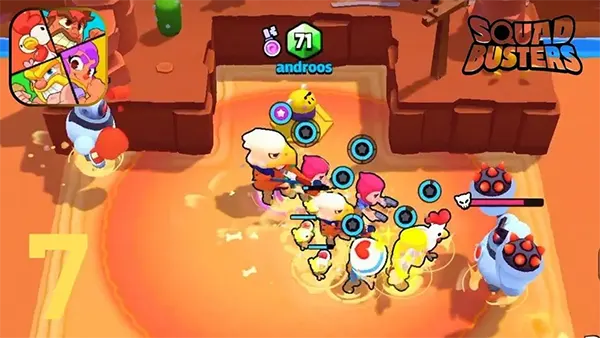
Three dependable archetypes for 2026: economy-first, fight-first, and hybrid control
Economy-first squads aim to scale without gambling on fights. They prioritise safe gem generation, fast rotations, and enough frontline to avoid being an easy target. The win condition is compounding value: you stay alive, keep upgrading, and take only clean fights where you can collect dropped gems without getting pinned.
Fight-first squads focus on controlled aggression, not constant brawling. They draft tools to start favourable fights, secure drops, and disengage before the lobby collapses onto them. The mistake is treating aggression as a permanent state; the best fight-first builds still rotate, farm, and pick targets rather than fighting whoever appears.
Hybrid control is the most flexible archetype in 2026 because it adapts to chest offers. It blends a modest economy plan with survivability and selective pressure. The goal is to stay hard to kill, win short trades, and exit safely while carrying gems. This style is less spectacular but more reliable across maps and lobby behaviours.
How to pick the right archetype on the fly
Choose economy-first when chest offers give you scaling and mobility, or when the lobby feels unusually aggressive early. In these matches, survival and tempo create more opportunities than trying to match every fight. Your best games will feel calm: you rotate, collect, and only commit when the outcome is obvious.
Choose fight-first when you are offered a strong early spike that lets you win short skirmishes without losing units, and when you have a clear way to chase or zone opponents off gems. If you cannot convert fights into drops, you will waste time and get outscaled by calmer squads.
Choose hybrid control when offers are mixed or uncertain. Build a stable core, then add whatever your squad lacks: mobility if you arrive late, sustain if you bleed units, or pressure if you cannot secure drops. In 2026, the strongest habit is not memorising one “best” build, but repeatedly drafting around the same practical questions: tempo, safety, and the ability to leave danger with your gems intact.