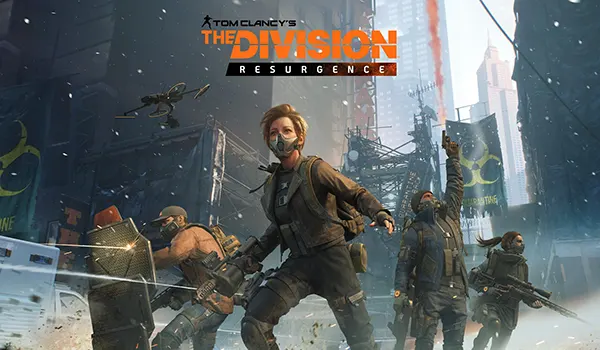
Ubisoft’s attempt to bring a full-scale tactical shooter to mobile devices with The Division Resurgence has sparked considerable discussion among players and industry observers. The ambition is clear: replicate the depth, atmosphere, and mechanics of a console-level experience on hardware that traditionally limits such scope. In 2026, with mobile devices becoming increasingly powerful, the question is no longer whether it is possible, but whether it has been executed properly. This article examines gameplay systems, technical performance, and overall player experience to determine how close Ubisoft has come to achieving this goal.
Gameplay Depth and Core Mechanics
The Division franchise has always been known for its blend of third-person shooting, RPG progression, and tactical decision-making. In Resurgence, Ubisoft has retained many of these elements, including skill trees, gear rarity, and cooperative missions. Unlike many mobile shooters that simplify mechanics for accessibility, this title attempts to preserve complexity, offering players a familiar loop of looting, upgrading, and engaging in structured combat scenarios.
One of the most notable aspects is the mission design. Instead of short, repetitive tasks, players are given structured objectives that resemble console gameplay, including multi-phase encounters and boss fights. This approach creates a stronger sense of continuity and immersion, especially during longer play sessions. It also aligns with the expectations of players who are already familiar with the main Division titles.
However, compromises are still evident. While the systems are present, their depth is slightly reduced. For example, skill customisation is more streamlined, and enemy AI, although competent, lacks the unpredictability seen in console versions. These adjustments make the game more suitable for mobile play but highlight the balance Ubisoft had to maintain between authenticity and usability.
Control Adaptation and User Experience
Adapting a console shooter to touch controls is one of the most challenging aspects of mobile game design. Ubisoft addresses this by offering multiple control schemes, including customisable layouts and optional controller support. This flexibility allows players to tailor the experience to their preferences, which is crucial for a game that relies heavily on precision.
The touch interface itself is responsive, but it inevitably introduces limitations. Actions such as aiming, moving, and activating abilities simultaneously can feel less fluid compared to traditional controllers. Despite this, the inclusion of aim assist and contextual actions helps mitigate frustration, making the game accessible without removing the skill component entirely.
Controller support significantly improves the experience and arguably brings the game closer to its console origins. When paired with modern mobile devices, the gameplay feels noticeably smoother and more intuitive, reinforcing Ubisoft’s intention to bridge the gap between platforms.
Technical Performance and Visual Fidelity
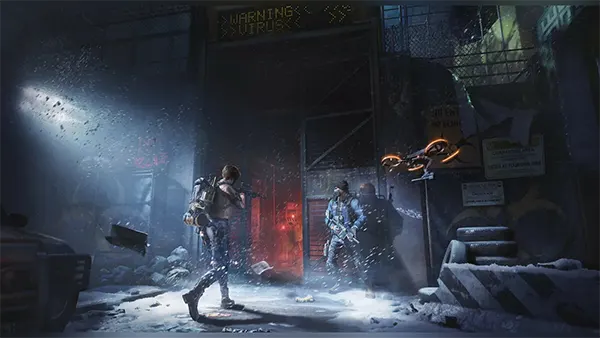
From a technical standpoint, The Division Resurgence demonstrates how far mobile hardware has evolved. The game features detailed environments, dynamic lighting, and character models that are comparable to older console generations. Urban settings, a hallmark of the franchise, are recreated with a level of detail that enhances immersion and supports the narrative tone.
Performance varies depending on the device, but optimisation has clearly been a priority. On high-end smartphones released in 2025–2026, the game runs at stable frame rates with minimal drops, even during intense combat scenarios. This consistency is essential for maintaining gameplay quality, especially in a shooter where timing and precision matter.
On mid-range devices, compromises become more noticeable. Reduced graphical settings and occasional frame instability can affect the overall experience. Nevertheless, the game remains playable, which suggests that Ubisoft has aimed for broad accessibility without entirely sacrificing visual quality.
Online Infrastructure and Stability
As an online-focused title, server performance plays a critical role in user experience. Ubisoft has implemented a stable matchmaking system that supports both solo and cooperative play. Load times are relatively short, and session stability is generally reliable, even during peak hours.
Latency remains a factor, particularly for players in regions with less optimised server coverage. While this is a common issue in mobile gaming, it can impact competitive modes more significantly than PvE content. Ubisoft has addressed this to some extent with regional servers, but the experience still varies depending on location.
Regular updates and live-service elements indicate ongoing support, which is essential for maintaining player engagement. Seasonal content, events, and balance adjustments help keep the game relevant, aligning it with the service model established by its console counterparts.
Overall Player Experience and Market Position
The Division Resurgence occupies an interesting position within the mobile gaming market. It is neither a casual shooter nor a simplified adaptation; instead, it targets players seeking a deeper experience on mobile devices. This positioning sets it apart from many competitors, which often prioritise accessibility over complexity.
Player reception in 2026 reflects this duality. Enthusiasts of the franchise appreciate the effort to maintain core mechanics and narrative tone, while newcomers may find the learning curve steeper than expected. This suggests that the game is more appealing to an existing audience rather than a broad casual base.
Monetisation also plays a role in shaping perception. While the game follows a free-to-play model, Ubisoft has avoided aggressive pay-to-win mechanics, focusing instead on cosmetic items and optional progression boosts. This approach aligns with current industry standards and contributes to a more balanced experience.
Does It Truly Feel Like a Console Game?
The answer depends largely on expectations. In terms of structure, mechanics, and presentation, The Division Resurgence successfully mirrors many aspects of its console counterparts. The inclusion of cooperative gameplay, detailed environments, and progression systems supports this claim.
At the same time, inherent limitations of mobile platforms remain. Control precision, hardware variability, and session length constraints prevent a complete replication of the console experience. These factors are not necessarily flaws but rather characteristics of the medium.
Ultimately, Ubisoft has come close to delivering a console-like experience on mobile, but it is more accurate to describe the game as a hybrid. It captures the essence of the franchise while adapting to the realities of mobile gaming, resulting in a product that feels familiar yet distinctly tailored to its platform.