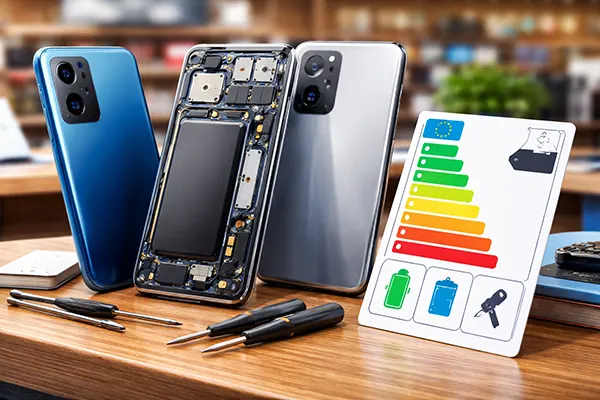
From 20 June 2025, smartphones and slate tablets sold in the European Union have had to follow new ecodesign and energy labelling rules. For buyers, this means the small sticker on the box now says much more than it used to. It no longer focuses only on electricity use. It also gives practical information about battery endurance, repairability, protection against dust and water, and resistance to accidental drops. In 2026, this label has become one of the most useful tools for anyone choosing a new phone, because it helps compare models on points that affect real ownership rather than only launch-day specifications.
Why the new EU smartphone label matters in practice
For years, many people bought smartphones by looking at brand reputation, camera claims, screen size or promotional offers. That approach often left important details hidden. A handset could look impressive on paper and still turn out to be expensive to repair, weak in battery ageing, or less durable than expected. The new EU label changes that by putting several long-term ownership factors in one visible place before purchase.
The main value of the label is clarity. Instead of relying only on advertising language, buyers can check standardised information prepared under the same rules for all covered devices. This makes it easier to compare products from Samsung, Apple, Xiaomi, Motorola, Honor, Google and other brands on equal terms. When two phones cost a similar amount, the label can show which one is more efficient, which battery is likely to age better, and which device should be easier to keep in service for longer.
This is also important beyond the point of sale. A phone is no longer a short-term gadget for many users. People expect a handset to remain reliable for several years, especially as prices have risen in the mid-range and premium segments. The EU rules support that shift by giving more weight to lifespan, resilience and repair, which are now central buying criteria rather than afterthoughts.
What changed under the 2025 EU rules
The updated framework introduced two connected sets of requirements: one for energy labelling and another for ecodesign. The energy label gives consumers a quick summary of performance classes and durability indicators, while the ecodesign rules set minimum standards manufacturers must meet if they want to sell eligible devices in the EU. In other words, the label informs the buyer, and the ecodesign rules push manufacturers to improve the products themselves.
These requirements cover smartphones, feature phones and slate tablets, though not every device category is treated in exactly the same way. The measures place stronger emphasis on battery endurance over repeated charge cycles, resistance to accidental falls, protection from dust and water, and the availability of spare parts. They also require manufacturers and professional repairers to work within clearer service expectations, which supports longer product life.
For consumers in 2026, the result is straightforward: the label is no longer a decorative extra. It is a condensed summary of how a device may behave over time. That makes it relevant not just for environmentally conscious buyers, but also for anyone who wants to avoid early replacement costs or poor long-term value.
How to read the energy efficiency and battery sections
One of the first things people notice on the label is the familiar A-to-G energy efficiency scale. This is similar in appearance to the labelling already used for household appliances, but the meaning in smartphones is adapted to mobile use. A device rated closer to A is considered more efficient under the EU test method, while one placed lower on the scale uses energy less effectively under comparable conditions.
This does not mean that a more efficient phone will always have the longest battery life in every daily scenario. Battery life still depends on battery size, processor behaviour, screen brightness, refresh rate, signal strength and the way the phone is used. However, the energy class gives a regulated point of comparison, which is far more useful than vague marketing phrases about all-day performance.
The label also includes information linked to battery endurance. This is one of the most practical parts of the new system. It helps consumers see not only how long a device can run in testing, but also how the battery is expected to hold up over time. Since battery wear is one of the most common reasons people replace a phone, that information has real value before purchase.
Battery cycles, runtime and what they mean for ownership
A key battery figure is the number of full charge cycles the battery can complete while still retaining a defined share of its original capacity. In simple terms, this tells you how well the battery is expected to age. A higher cycle figure generally means the phone should remain dependable for longer before the battery becomes noticeably weaker. This matters to users who keep a handset for three, four or even five years rather than upgrading often.
Runtime data should also be understood carefully. Test results are standardised, which is helpful, but no label can predict the exact way one individual will use a phone. Mobile gaming, 5G use, constant navigation, high screen brightness and video capture will drain power faster than messaging, reading or occasional browsing. The label is best used as a fair benchmark for comparing models, not as a guarantee that every user will see identical daily results.
Even with that limitation, the new battery information is far more informative than older buying habits based only on milliamp-hour figures. A large battery on its own does not guarantee better long-term experience. Efficiency, software behaviour and battery ageing all matter. The EU label finally gives buyers a clearer way to factor these points into a purchasing decision.
Repairability, durability and drop resistance explained clearly
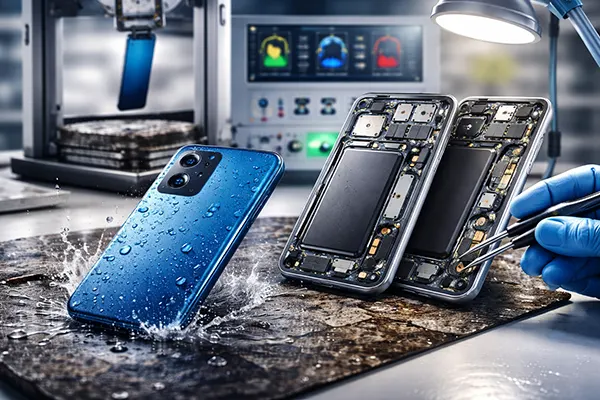
Another major strength of the new label is that it treats toughness and repair as core features. That reflects the reality of ownership. Many phones are replaced not because the processor becomes unusable, but because the screen breaks, the battery fades, charging components fail, or repair becomes too costly to justify. By including repairability and durability information, the EU rules push these real-world issues into the centre of the comparison process.
Repairability relates to how realistically a device can be serviced when something goes wrong. This includes access to spare parts, the possibility of replacing important components, and the broader service conditions around maintenance. A phone that is difficult to open, heavily glued together, or poorly supported after launch may create high repair costs even when the original fault is minor. A stronger repairability profile suggests better long-term prospects.
Durability is equally important. The label gives buyers extra context about how well a device is expected to handle normal wear. This includes resistance to accidental drops and protection against solids and moisture. For many people, that is more useful than polished promotional language about premium design, because it deals with the situations that actually shorten a phone’s life in daily use.
How these ratings help you choose a better phone in 2026
When comparing two similar smartphones, the durability and repair indicators can reveal which model is likely to remain practical after the first year or two. A handset with a slightly less impressive camera but stronger repair support and better drop resistance may prove the better purchase for work, travel or family use. This is particularly relevant in 2026, when replacement and repair costs remain high across much of Europe.
These ratings are also useful for buyers who want to avoid hidden ownership costs. A cheaper phone is not always the more economical option if the battery degrades quickly, spare parts are hard to source, or the device is fragile in everyday handling. On the other hand, a well-rated device may justify a higher upfront price because it has a stronger chance of lasting longer with fewer expensive problems.
The smartest way to use the new EU label is to treat it as part of a broader buying checklist. It should sit alongside price, software support, camera performance, storage, display quality and network features. Yet in one important sense, the label changes the buying conversation. It gives consumers a more realistic view of what happens after the unboxing stage. That is why, in 2026, anyone buying a smartphone in the EU should know how to read it properly before making a final choice.