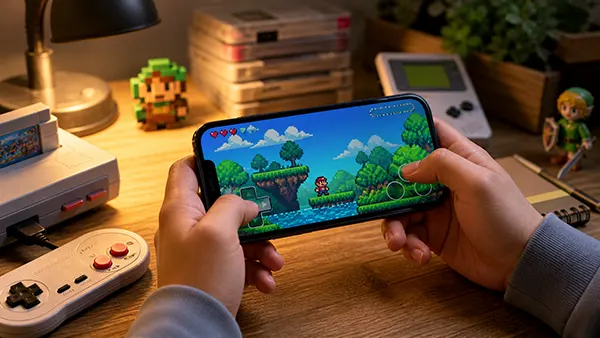
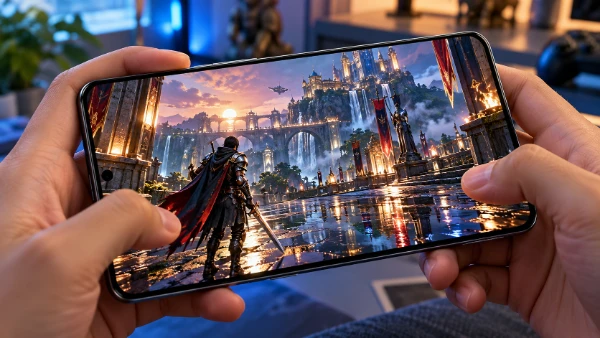
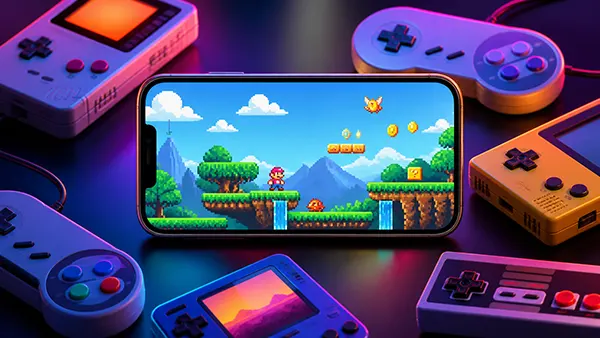
By 2026, emulation on iPhone has moved from a grey-area workaround to a recognised and regulated part of the mobile ecosystem. What was once limited to sideloading, jailbreaks, and unstable builds is now available directly through the App Store, reshaping how players access classic titles. This shift has not only simplified installation but also raised questions about legality, performance, and long-term preservation of retro games.
The Turning Point: Apple’s Policy Shift on Emulators
The major shift began in 2024 when Apple revised its App Store guidelines to allow certain types of emulators. By 2026, this decision has fully materialised into a growing category of apps that support legacy consoles such as NES, SNES, Game Boy, and even early PlayStation systems. Developers now operate within clearer rules, focusing on emulator functionality rather than distributing copyrighted ROMs.
This policy change was largely influenced by regulatory pressure in regions like the EU, where digital market competition laws required Apple to open its ecosystem. As a result, users gained access to tools that had previously been restricted, while Apple maintained control over content distribution standards.
From a user perspective, the experience has become significantly more stable. Emulators available today are optimised for iOS hardware, supporting touch controls, external controllers, and cloud synchronisation. The barrier to entry has effectively disappeared.
Legal Boundaries and Content Ownership
Despite broader availability, the legal framework around emulation remains complex. Emulators themselves are legal, but downloading ROMs for games you do not own still violates copyright laws in many jurisdictions. This distinction is now clearly reflected in App Store policies.
Developers have responded by integrating support for user-imported files and linking to legally distributed game libraries. Some publishers have even begun re-releasing classic titles in compatible formats, recognising renewed demand from mobile audiences.
For players, this means greater responsibility. The convenience of App Store access does not remove legal obligations, and users must ensure they obtain game files through legitimate channels.
Performance and Compatibility on Modern iPhones
Hardware improvements in iPhone models released between 2023 and 2026 have played a key role in the success of emulation. Apple’s A-series and M-series chips deliver enough power to emulate older consoles with near-perfect accuracy, including systems that previously required desktop-level performance.
Modern emulators now support features such as save states, graphical upscaling, and reduced input latency. These enhancements go beyond the original hardware capabilities, offering a smoother experience than many legacy consoles could provide.
Compatibility has also improved significantly. Developers continuously update emulator cores, ensuring support for a wider range of titles without crashes or visual glitches. This level of refinement was rarely achievable in earlier unofficial versions.
Controller Support and User Experience
One of the biggest improvements lies in control options. iOS now fully supports Bluetooth controllers, including PlayStation and Xbox devices, making gameplay far more comfortable compared to touchscreen-only setups.
Customisable overlays and haptic feedback further enhance usability. Players can adjust button layouts, opacity, and responsiveness, tailoring the interface to suit different genres and play styles.
This attention to user experience has made emulation feel less like a workaround and more like a native gaming solution on iPhone.
The Future of Retro Gaming on iOS
The presence of emulators in the App Store has changed how retro gaming is perceived. It is no longer a niche activity reserved for enthusiasts but part of a broader gaming culture accessible to everyday users.
Game preservation has become a central topic. With official support for emulation tools, there is growing recognition of the need to maintain access to older titles that are no longer commercially available.
Developers and publishers are also adapting. Some studios are exploring partnerships with emulator creators, while others release curated collections of classic games optimised for mobile devices.
Challenges and Ongoing Limitations
Despite progress, challenges remain. Not all console generations are supported equally, and more complex systems still require optimisation. Additionally, Apple continues to enforce strict rules regarding executable code and external downloads.
There is also the question of monetisation. Many emulator apps rely on freemium models or subscriptions, which can limit access to advanced features unless users are willing to pay.
Looking ahead, the evolution of emulation on iPhone will depend on both technological advances and regulatory decisions. However, as of 2026, it is clear that retro gaming has found a stable and legitimate place within the iOS ecosystem.